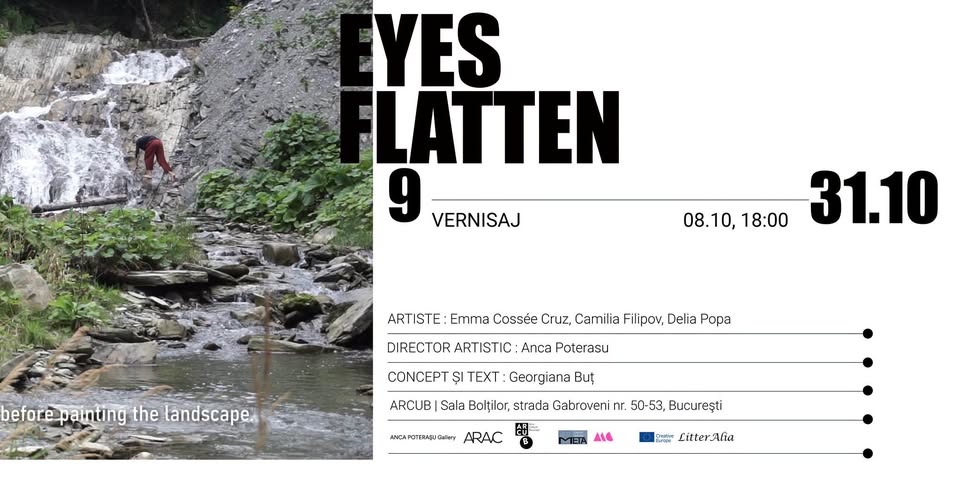
Artiști: Emma Cossée Cruz, Camilia Filipov, Delia Popa
Concept and text: Georgiana Buț
Artistic Director: Anca Poterașu
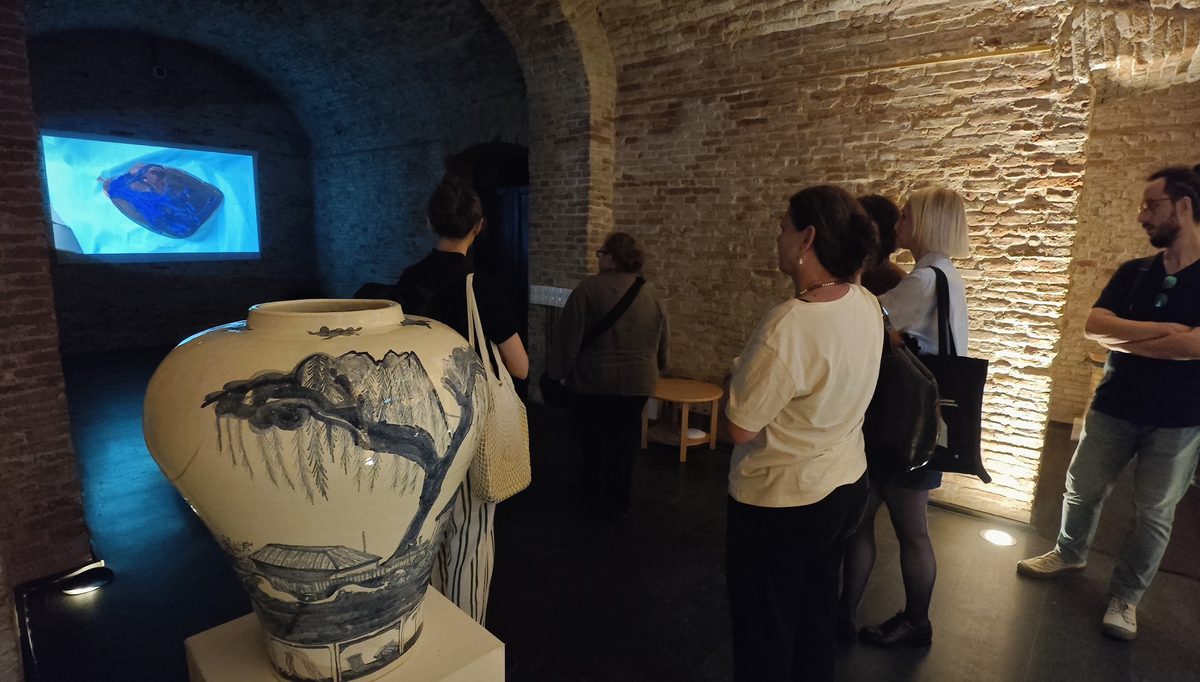
Location: ARCUB – Hanul Gabroveni, Sala Bolților (str. Lipscani nr. 84-90)
Date: 9–31.10.2026
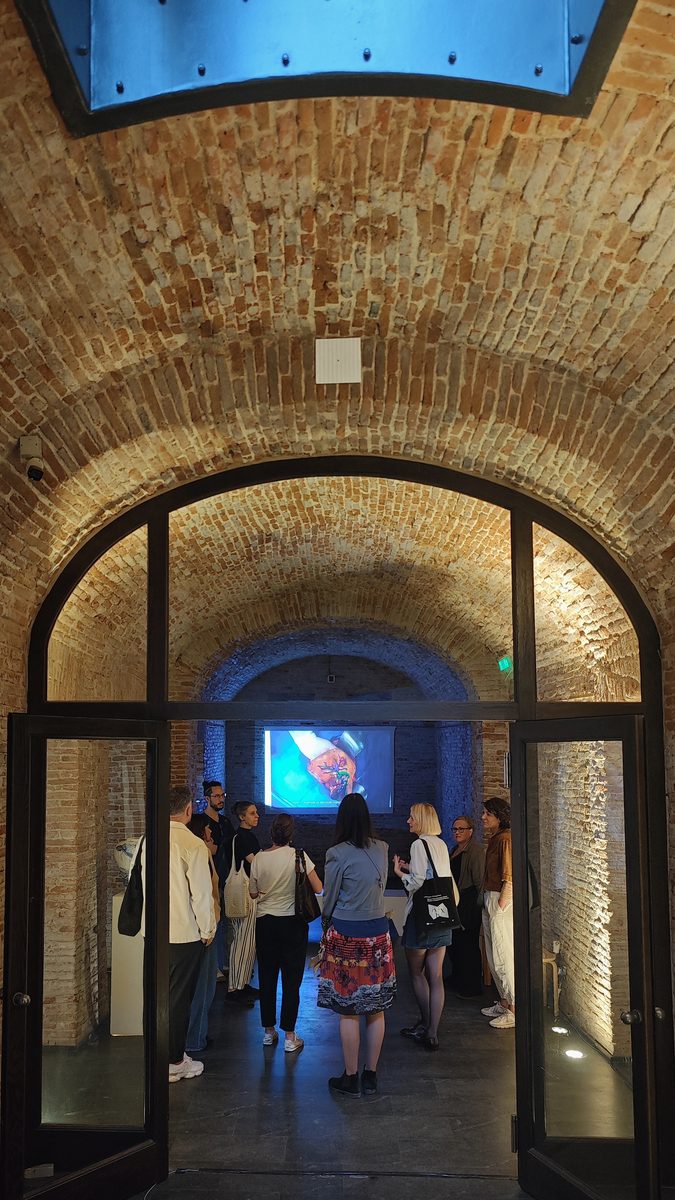
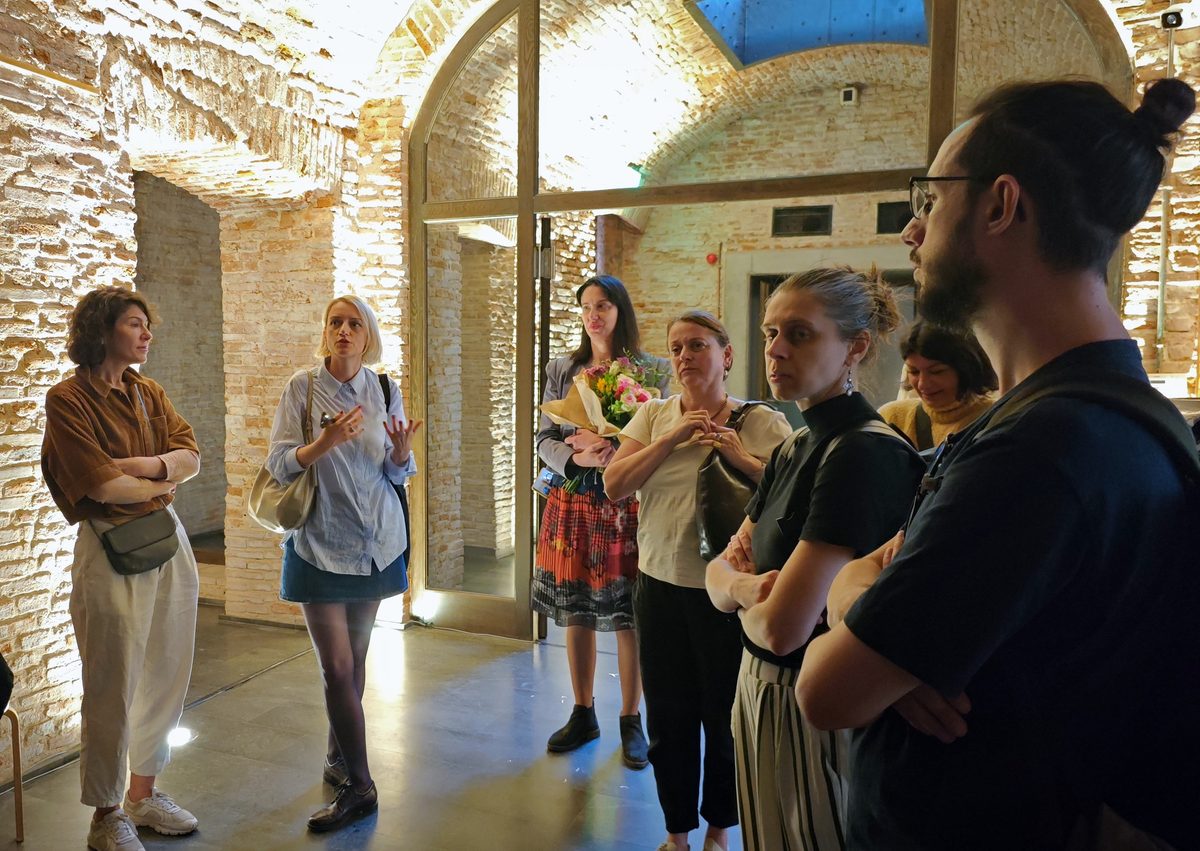
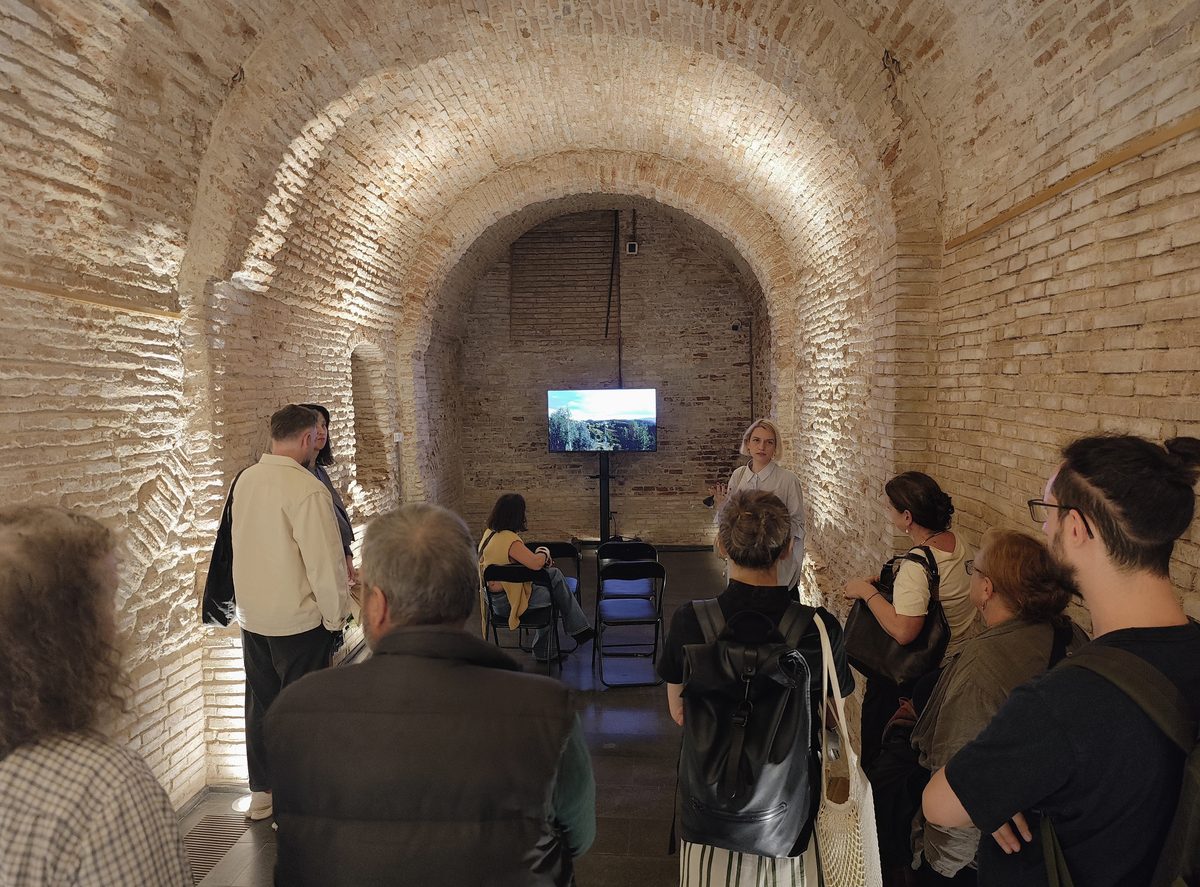
“By 2050, half the population will be short-sighted. Eyes flatten [les yeux s’aplatissent] due to a lack of exposure to natural light.” The idea, voiced by artist Emma Cossée Cruz at the end of her video work Réalìa, inspired the exhibition title, which hinges on a deliberate ambiguity created by the addition or omission of the reflexive pronoun: eyes flatten themselves and, in turn, flatten the reality around them. This suggests the exhibition’s central concern: the inherent limits of vision, the conditions that shape it in the digital present, and the possibilities of its transfiguration through imagination. Eyes flatten brings together three artists, Emma Cossée Cruz (France/Chile), Camilia Filipov (Romania/Moldova) and Delia Popa (Romania), who reflect on the very act of looking in a contemporary society marked by the omnipresence of screens and two-dimensional communication. The exhibition unfolds through a series of works and installations and is the outcome of artistic reflection that took
place within the framework established by a video art residency. Organised by the META Cultural Foundation in the village of Slon, in the foothills of the mountains in Prahova County, the residency was part of a Creative Europe programme coordinated by the Kaunas Biennial. In August 2025, the three artists selected by curator Georgiana Buț were invited to spend two weeks together, engaging with the landscape and culture of the village and using video as a means of slow, reflective discovery. This first public presentation of the works created during the residency brings their dialogue into the gallery space, foregrounding their shared concerns with ways of living, looking and creating in the present.
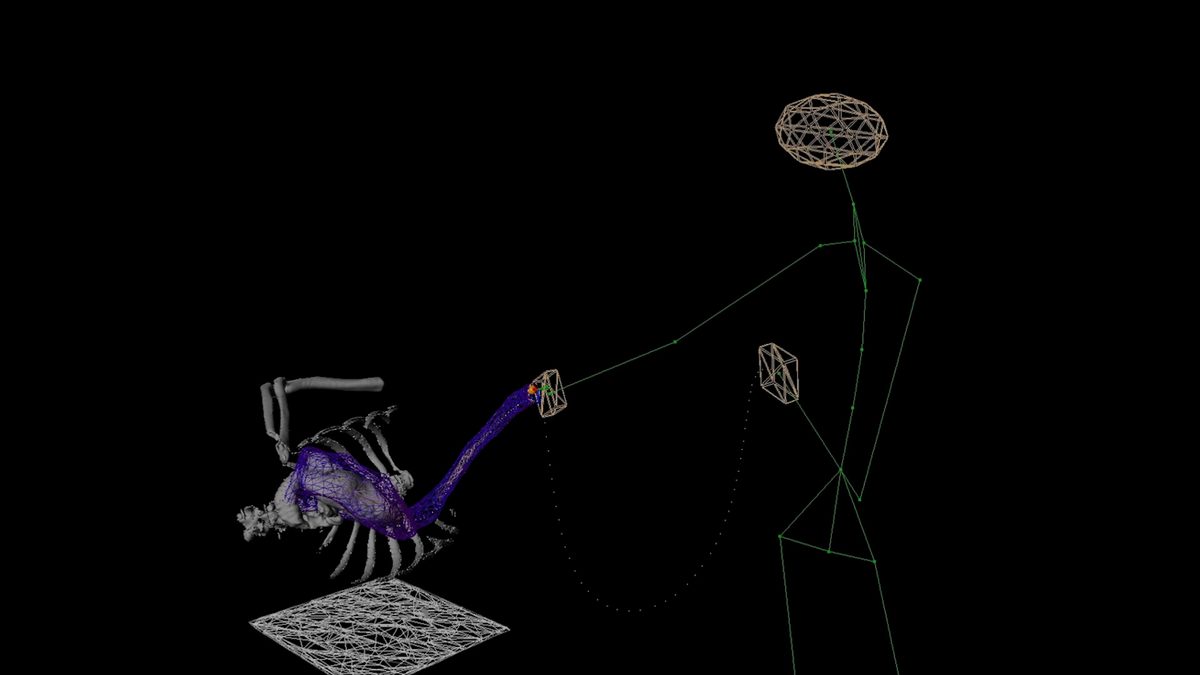
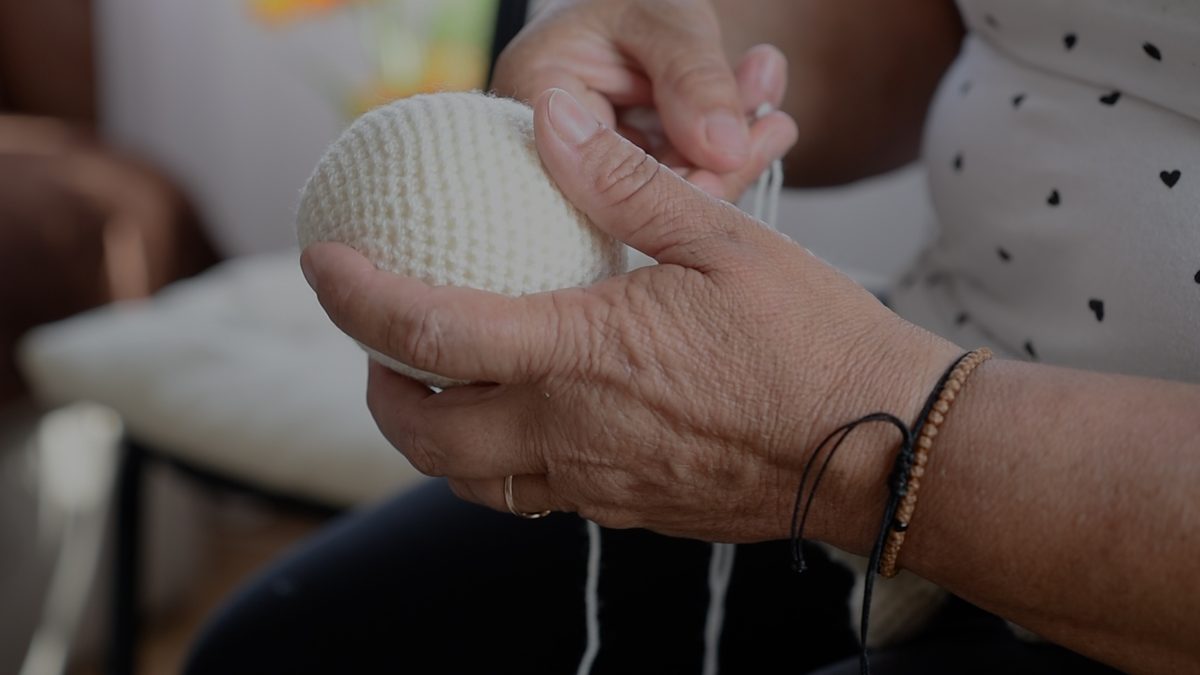
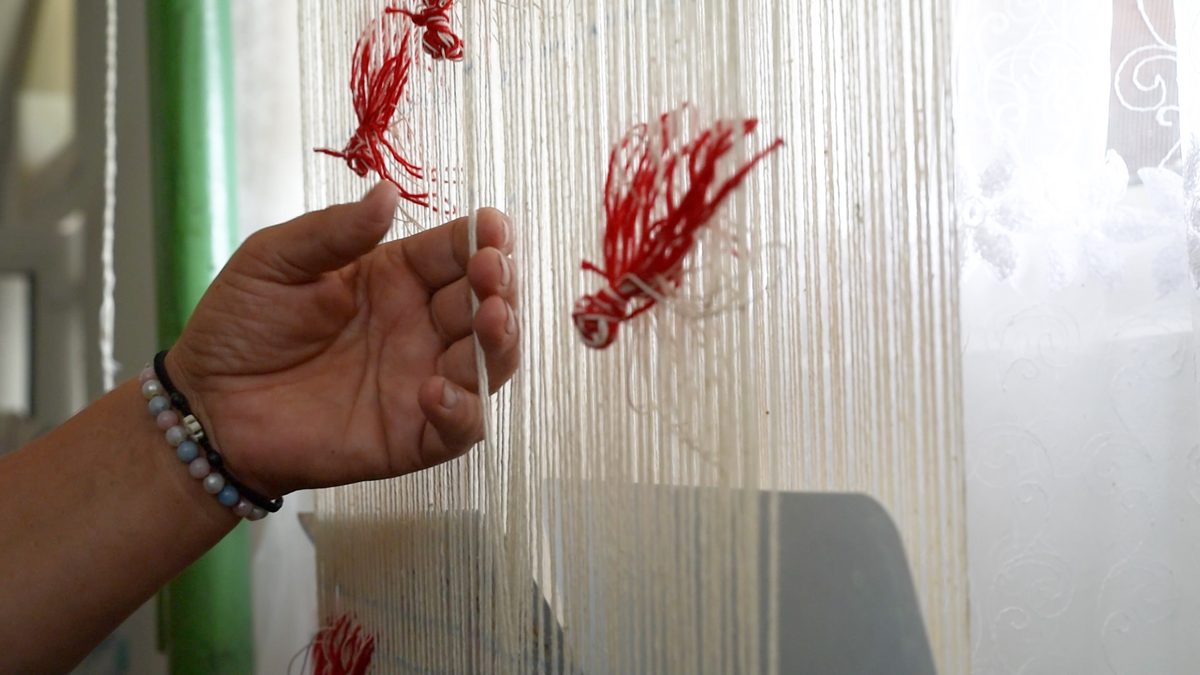
Emma Cossée Cruz engages with the technological concept of the “digital twin” in a meditation on the materiality of the body as it is transposed from the real into the virtual and back again, with the digital double remaining a ghostly overlay. Interested in the interaction between the body and objects, and in how they shape one another, Emma Cossée Cruz immerses herself in medical research environments and undertakes residencies in digital technology innovation laboratories. Focusing on image-producing devices, she documents, through photography and video, medical imaging equipment that records the inside of the body, as well as computers and sophisticated instruments that reproduce its organs as digital twins (stored under the designation “ghosts”), serving as tools for surgeons. The artist traces the growing convergence of body and apparatus: the body is extended by the object; the body extends itself, recreated in digital form; the body becomes a vehicle for technology. In her video work Réalìa, Emma Cossée Cruz uses archival visual material alongside her own documentation produced at the French National Institute for Research in Digital Science and Technology (Inria) in Strasbourg, as part of a project tellingly entitled “Mimesis”. She also incorporates video footage made during the residency in Slon, where a number of local women still weave on traditional looms. She records the working hands of surgeons and weavers, the elasticity of digital tissues and the vibrations of woollen threads, the rhythmic sounds of computers and weaving instruments. By juxtaposing and superimposing images from inside the laboratory with those from village homes, Emma suggests affinities between craftsmanship and algorithms, between thread and code. The work thus evokes the virtuosity and ingenuity of techniques that are interwoven in a shared history: weaving automated through the introduction of punched cards in the early nineteenth century foreshadowed the binary system and data storage, anticipating the computational model. Emma Cossée Cruz does not refer directly to Ada Lovelace, the mathematician who wrote that “the Analytical Engine weaves algebraical patterns just as the Jacquard loom weaves flowers and leaves” – a parallel that is only apparently metaphorical, since it is in fact grounded in a technical connection. She does, however, draw attention to women’s position in the history of technological development by invoking Angélique du Coudray (1712–1769), who trained tens of thousands of midwives in medical procedures using obstetric mannequins that imitated the female body, inventions she called “my machines”. Throughout the work, the artist’s narrative voice approaches personal confession, unfolding as a meditation in which recollection traces the painful stages of associating words with meaning, of naming, looking and understanding. The technological abstraction of the body, its mechanisms and its accidents reverberates with the
abstraction of language and memory, at the limits of which a striking term such as aneurysm may remain for a long time “a word without an image”.
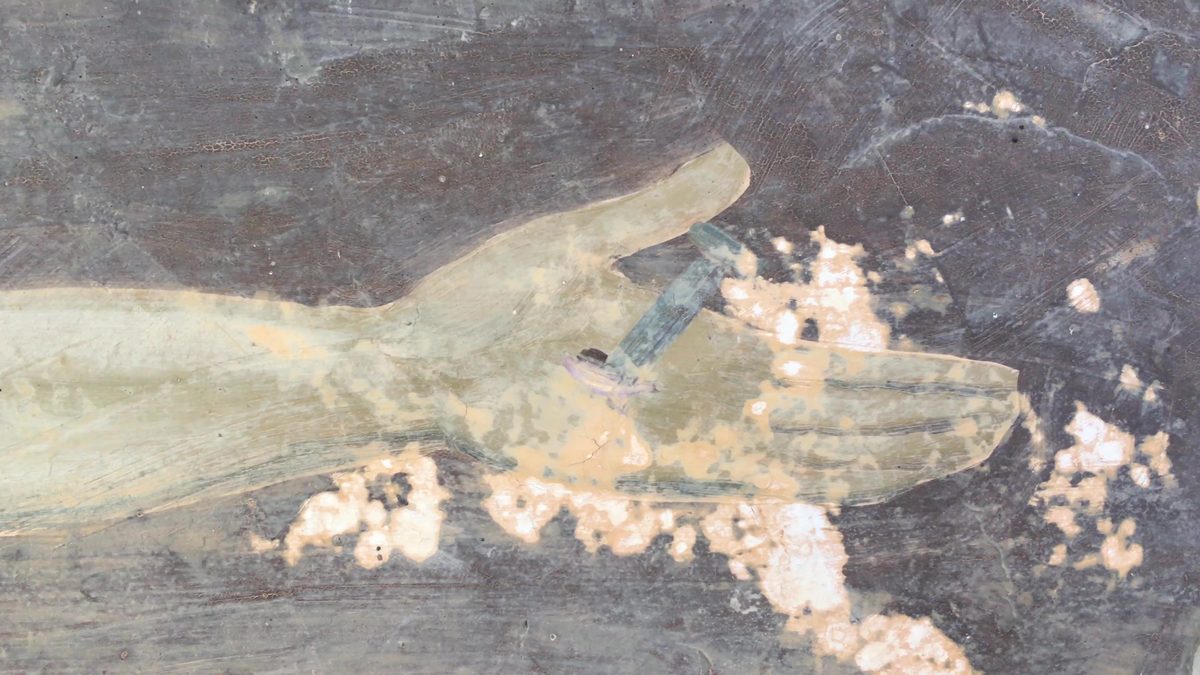
Camilia Filipov approaches video art through minimal means, as a conceptual and meditative visual practice in which the process itself is essential, as is the way it intensifies attention, allowing looking or framing to be suddenly transfigured into open-ended creative acts. In Blinking Circle, a collage of moving images conceived around the two terms in its title, the act of blinking, represented by the monochrome frame of a coloured light – “the sun beneath the eyelids”, as Camilia describes it – sets the rhythm and structure of the work. The sun is the element that opens and closes it in a playful symmetry: at the beginning, through an act of tracing a circle with the gaze, and at the end, with a pencil. Through its play with the perception of light and form, its contrasts and rapid alternations of images, and the tension between forms heightened by a single sonic intervention, Camilia Filipov articulates her own concept of ars poetica. The gaze follows the rotation of a stretcher, the reverse of a canvas, a hand drawing or turning elements of nature – material points of reference and gestures involved in the creative act The videos “Dialogue (collecting raindrops)” and “Thorns (collecting thorns)” are part of a larger work entitled Practices, which proposes repetition as a form of knowledge. The gestures described in the titles, simple and methodical, elicit kinaesthetic empathy: the sensation that the viewer is the one performing them and perhaps even the one filming. In tightly framed, moving shots, a hand carefully approaches raindrops resting on leaves, buds and pine needles. The drops disintegrate upon contact, and the slowed-down gesture amplifies their fragility, set against the hardness of the thorns. Knowledge is presented as an attentive, continuous practice – a paradoxical attempt to catch something ephemeral in the palm of one’s hand.
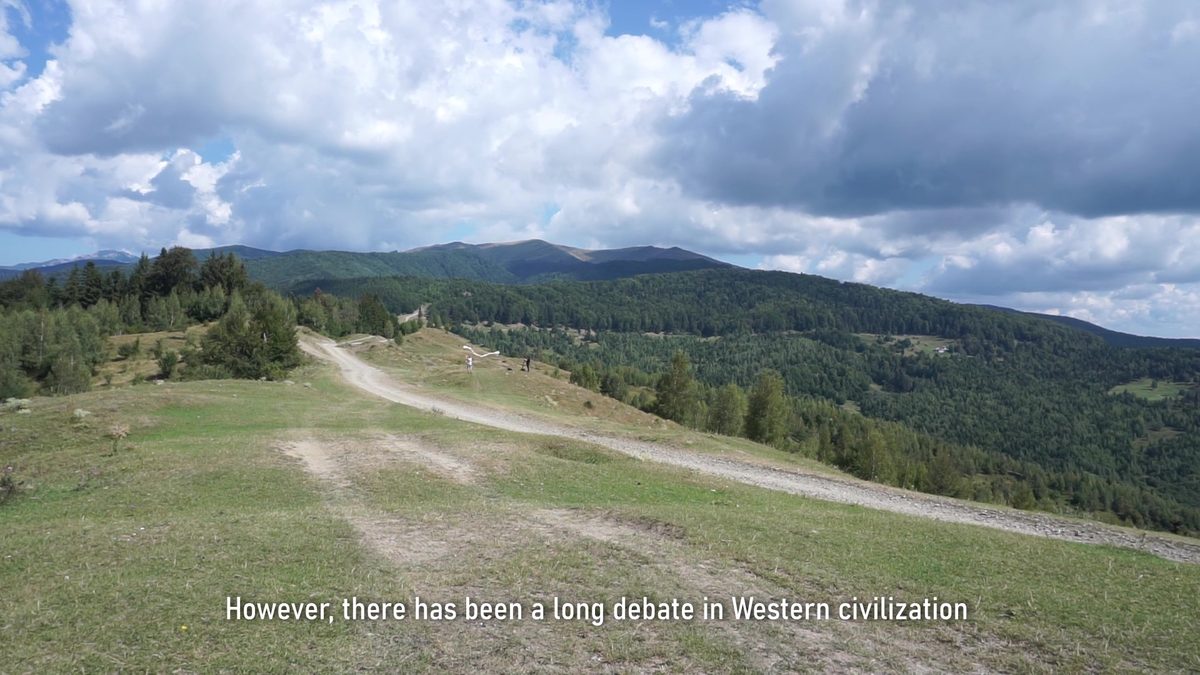
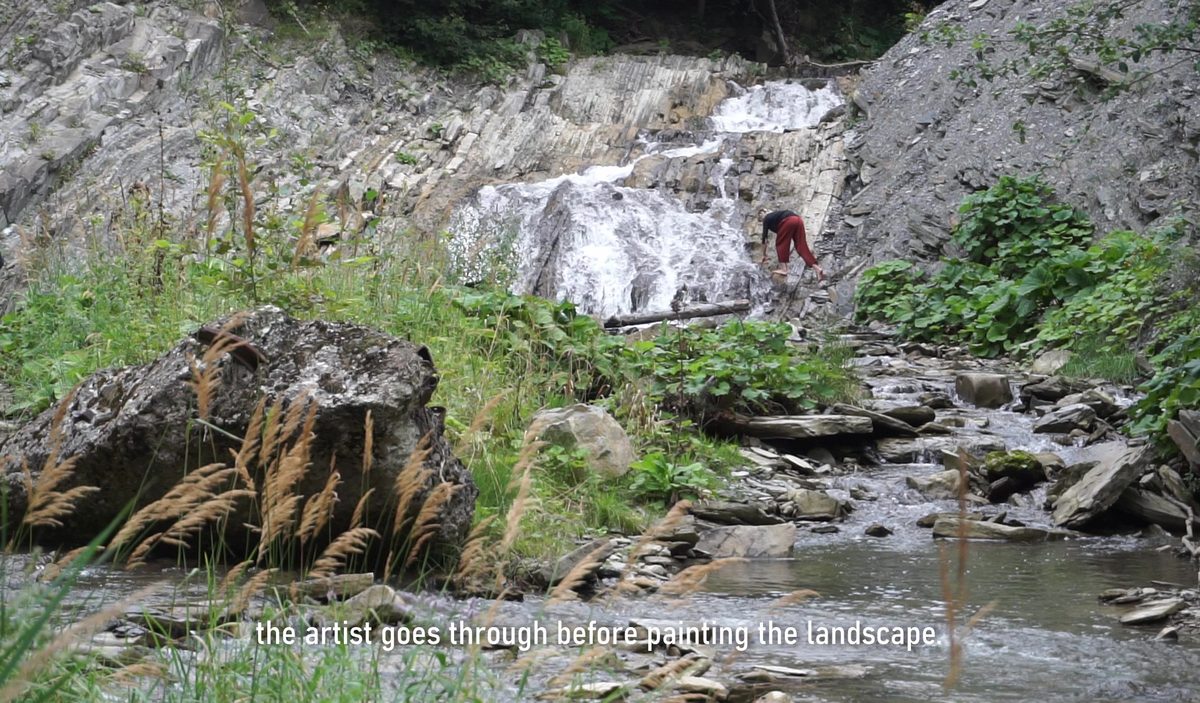
Delia Popa explores the village of Slon with the Chinese practice of Shanshui hua in mind, or “painting of mountains and water”, a tradition that connects the perception of landscape with movement. Following this pictorial tradition, moving through nature over time becomes a form of deeper knowledge that suspends visual determination and precedes its rendering through art. In order for the represented subject to be expressed in its entirety, Chinese painting developed the rule of the three distances, perspectival techniques theorised by Guo Xi in the eleventh century – height, depth and level distance – which were supplemented by Han Zhuo in the twelfth century with three further distances, more atmospheric in nature. In the fifth distance, for instance, the terrain is concealed by mist and shrouded in mystery. These are the expressive means of a system of multiple perspective, intended to be used simultaneously in order to convey a profound relationship with a nature in perpetual change, defined by the passage of time.
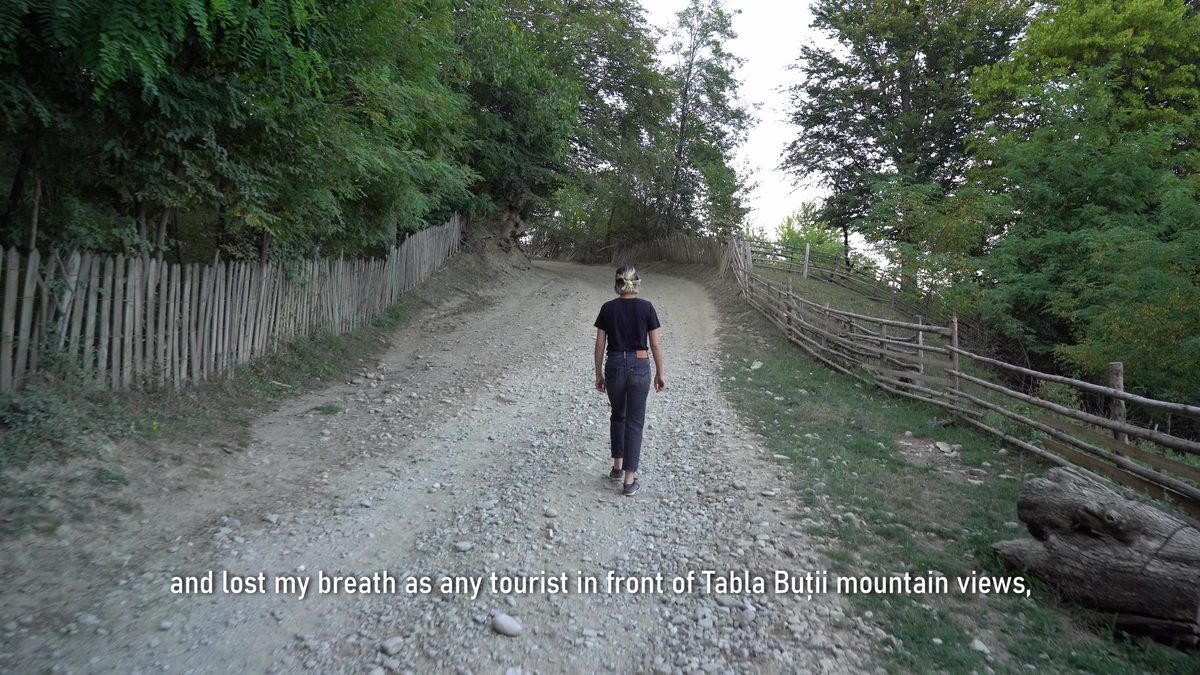
Inspired by Chinese painting, Delia Popa approaches the rural landscape of Slon in Studies after Shan Shui, following the rules of the six distances. She tests how video, as a medium of moving images, responds to the superimposition of historical modes of representation specific to the still image, each with a different approach to the rendering of space and time. In experimenting with different conceptions of landscape, her aim is not so much to break away from the European model in which she was trained as to bring together, productively, conventions heavy of their own cultural and political implications, as well as anachronistic aesthetic approaches and technical possibilities. Often with a touch of irony, these combinations short-circuit entrenched expectations of contemporary landscape as a place of contemplation or tranquillity, directing attention instead towards the village as it exists today and the visible transformations it is undergoing. Delia constructs her reflection through a signifying dynamic between image and text. The latter takes the form of
an essay spoken by three narrative voices: the artist’s voice in Romanian, that of a local woman from Slon in Chinese, and that of a British artist based in Bucharest in English. Together, they persistently repeat the question, “What, then, is a landscape?” Their juxtaposition marks the points of departure for looking, but also for speaking,
as if within a political geography of art.
EMMA COSSÉE CRUZ (born 1990, France) is a French-Chilean artist who lives and works in Marseille. A graduate of the École des Beaux-Arts in Paris, she also studied at the Universität der Künste in Berlin and UNA in Buenos Aires. Her installations, which combine photography, video and sculpture, document or transform the apparatuses that interact with our bodies and contribute to shaping our ways of life, our imagination and our desires.
DELIA POPA (born 1980, Bucharest) is a Romanian artist who lives and works in Bucharest and Crețești (Ilfov County). Her work is represented in some of Romania’s most important public contemporary art collections, and she is known for her feminist approach to art. Her practice encompasses painting, drawing, printmaking, installation, video and performance. Her current research focuses on the representation of landscape and local topography, exploring their connections with ecology and rural environments.
CAMILIA FILIPOV (born 1990, Moldova) is an artist originally from the Republic of Moldova, based in Cluj- Napoca, Romania. She studied sculpture at the University of Art and Design in Cluj-Napoca and at the École supérieure des arts Saint-Luc in Liège, Belgium, as part of the Erasmus programme. Her artistic practice is grounded in the conviction that the creative process takes precedence over the final outcome and explores meaningful contrasts, particularly that between movement and stability.
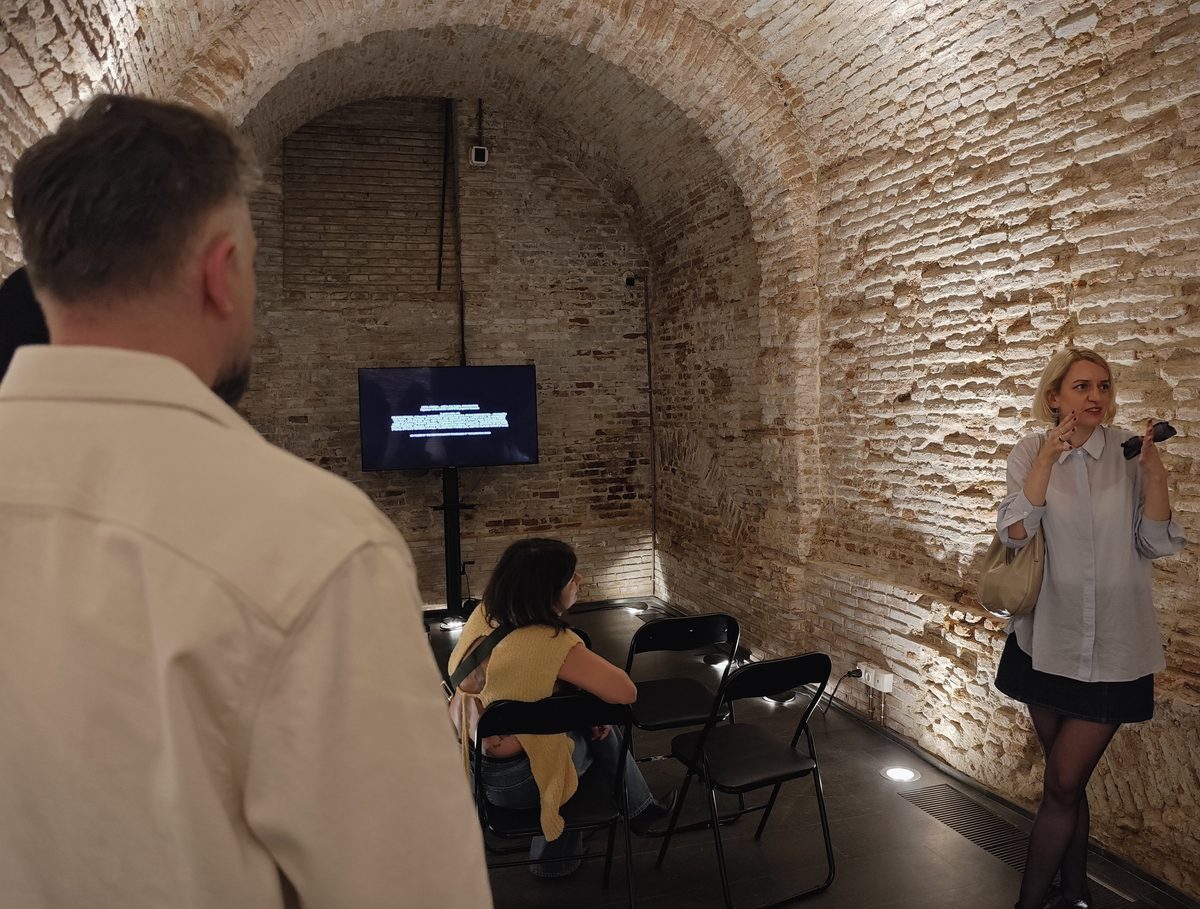
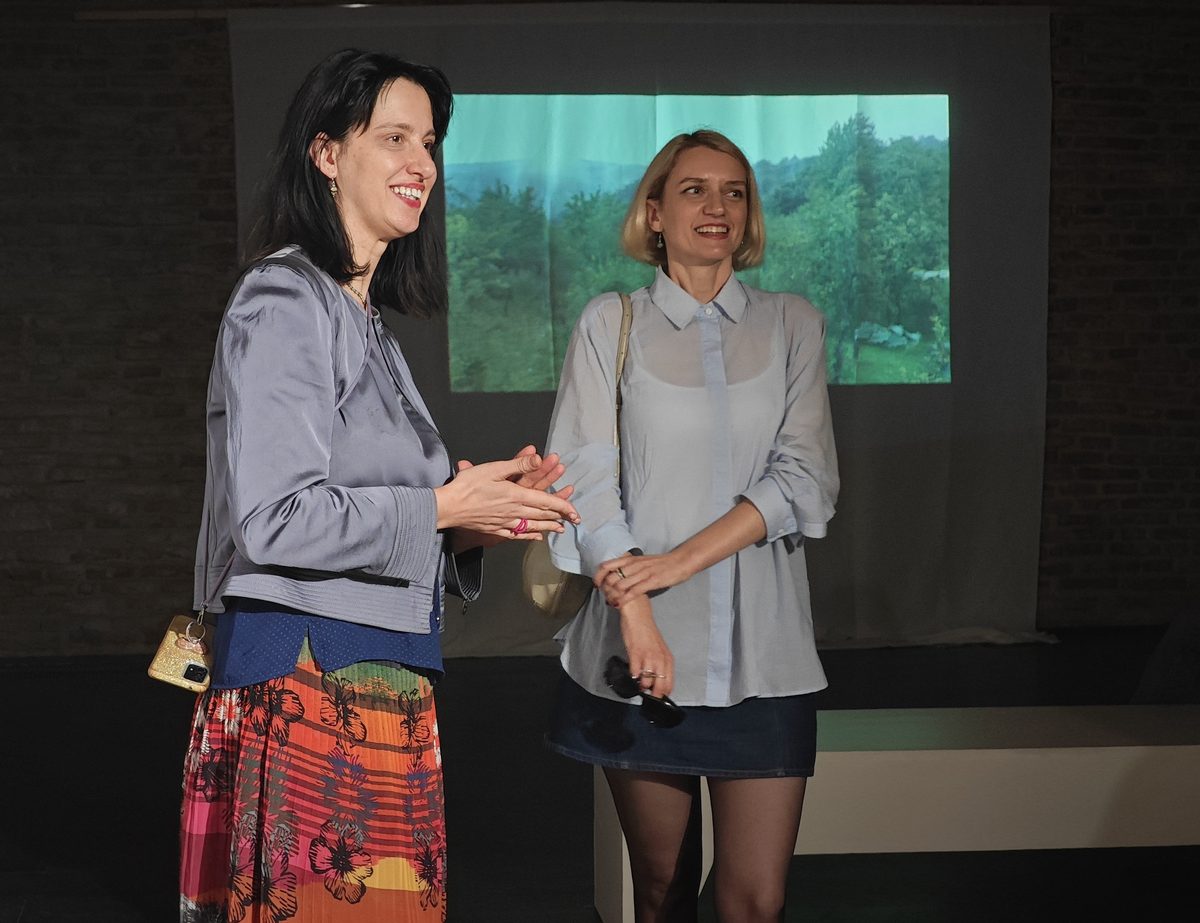
The exhibition Eyes flatten, featuring works by artists Emma Cossée Cruz, Camilia Filipov and Delia Popa, was presented by the Romanian Association for Contemporary Art (ARAC), in partnership with the Bucharest City Hall, through ARCUB, at ARCUB – Hanul Gabroveni, in the Vaulted Hall. The project was organized in partnership with the META Cultural Foundation and Anca Poterașu Gallery, with the support of the Litterallea Association.