
Project Lead: DOCUMENTA Center for Dealing with the Past
Project Partner: Romanian Association of Contemporary Art (ARAC), BLOCKFREI – Vienna, Memorial Site Bautzner Straße Dresden;
Time Period: 1 January 2024 – 31 May 2026
Locations: Zagreb, Bucharest, Dresden, Vienna
The (In)Visible Traces Artistic Memories of the Cold War project brings together artists, cultural professionals, researchers, youth, educators, and policymakers to engage in a collaborative exploration of European cultural heritage, with a focus on the Cold War era. The project highlights the importance of preserving and recognizing historical buildings and sites that played a key role during the Cold War, many of which are now vacant or at risk of being forgotten. By combining artistic expression, research, and heritage protection, the project aims to shed light on these neglected locations.
Through residencies, artistic interventions, and exhibitions such as You Betrayed the Party When You Should Have Helped It, the initiative will generate new material to stimulate reflectionon Europe’s divided past, while also advocating for the legal and physical preservation of these historical spaces. The project seeks to protect and promote European heritage at risk, contributing to cultural dialogue and offering recommendations for safeguarding historicalmemory across Europe.
Main Activities:
- Study Visits: ARAC and its partners in the project (In)Visible Traces: Artistic Memories of the Cold War organized a study visit in Bucharest, Romania, from September 18th to September 22nd, 2024. The purpose of the visit was to contribute to the preservation and promotion of European cultural heritage from the Cold War, focusing on at-risk heritage. The study visit aimed to connect artists from across Europe with researchers and others.
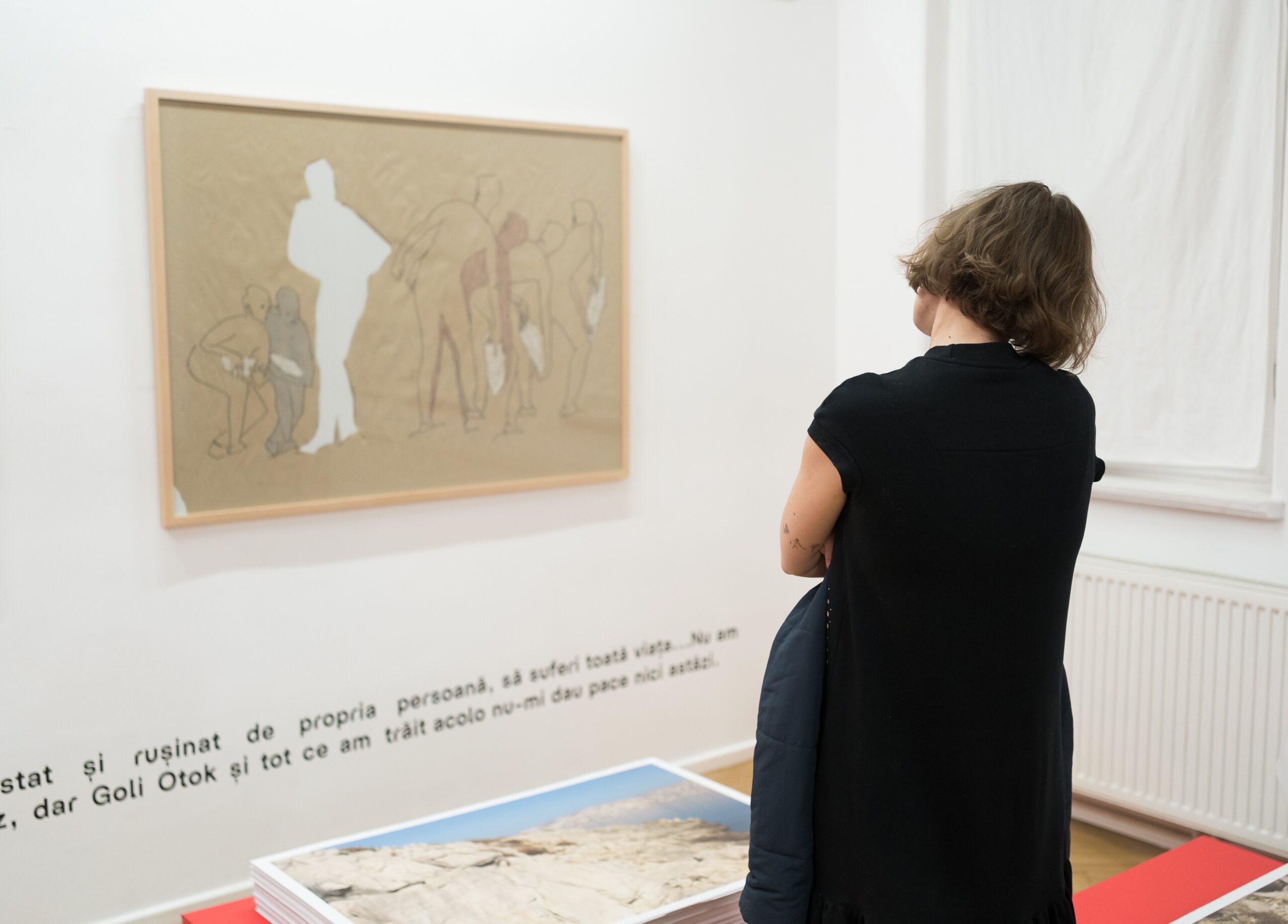
- Andreja Kulunčić’s exhibition – You Betrayed the Party When You Should Have Helped It, curated by Anca Mihulet and Irena Bekic, in Bucharest, at Anca Poterasu Gallery (17th of December 2024 – 31 January 2025). The opening began with a discussion featuring historian Claudia Dobre and anthropologist Renata Jambrešić Kirin, focusing on the discomfort experienced by female prisoners in the contexts of Yugoslavia and Romania (“Discomfort of Being a Female Prisoner: The Cases of Yugoslavia and Romania”).The exhibition focuses on the transformation of women’s bodies subjected to oppression or trauma. Designed to generate an evolving experience for visitors, it does not conclude with a reconstruction of the repression experienced by female prisoners. Instead, it branches out rhizomatically beyond the space and time of the exhibition, with the fragile memories of former prisoners serving as a foundational yet delicate basis for consolidating this contested history.
- Residency in Bucharest with Iosif Kiraly: The Hole in the Flag Remains a Symbol of the Revolution
During the implementation period of the project (In)Visible Traces. Artistic Memories of the Cold War (2024–2026), a series of public discussions, round tables, artistic interventions, exhibitions, research activities, educational programs, study visits, advocacy initiatives, and international exchanges took place across Croatia, Germany, Austria, and Romania. Through conferences, public programs, online campaigns, publications, collaborations with cultural institutions and civil society organizations, as well as advocacy activities related to endangered sites of memory such as Goli Otok and Sveti Grgur, the project sought to open broader public dialogue on neglected, marginalized, and contested 20th-century heritage sites and their relevance today.
As part of this process, we are publishing the report “20th Century Heritage in Danger – Recommendations and Perspectives from the (In)Visible Traces Project.”
The publication brings together reflections and recommendations developed through activities in Croatia, Germany, Austria, and Romania, focusing on sites of memory connected to political repression, violence, and difficult histories. The recommendations combine proposals and reflections emerging different activities, later collectively revisited and consolidated during the final project conference held in Dresden in March 2026.
The recommendations address cultural institutions, policymakers, educators, researchers, artists, and civil society organizations, emphasizing the importance of long-term care, public participation, interdisciplinary cooperation, advocacy, and contemporary artistic approaches in working with difficult heritage.
At a time when many sites of memory remain abandoned, politically contested, increasingly commercialized, or insufficiently protected, the publication calls for stronger institutional responsibility and more inclusive, democratic approaches to remembrance across Europe.
The full publication is available in the attached PDF below.
more details about our exhibition: https://www.ancapoterasu.com/expozitii/you-betrayed-the-party-just-when-you-should-have-helped-it/
more details on this project: https://kulturasjecanja.documenta.hr/en/projects/invisible-traces-artistic-memories-of-the-cold-war/


20th Century Heritage in Danger – Recommendations and Perspectives from the (In)Visible Traces Project.
The project is co-funded by the European Union. Views and opinions expressed are however those of the author(s) only and do not necessarily reflect those of the European Union or the European Education and Culture Executive Agency (EACEA). Neither the European Union nor EACEA can be held responsible for them.

